
Most people like to believe they make financial decisions logically.
They assume they carefully analyze situations, compare options objectively, and make smart money choices based purely on facts.
But real life usually works very differently.
People spend emotionally.
Invest emotionally.
Borrow emotionally.
Panic emotionally.
And afterward, they often create logical explanations to justify decisions that were emotionally driven from the beginning.
This is exactly what Behavioral Finance studies.
Behavioral Finance explores how psychology, emotions, cognitive biases, and human behavior influence financial decisions.
And once people begin understanding how emotional money decisions actually are, they often start viewing finance in a completely different way.
Traditional Finance Assumed Humans Behaved Rationally

For many years, traditional financial theories were built around one central assumption:
People behave rationally.
The idea seemed simple.
If individuals want financial success, they will naturally make logical decisions that maximize long-term benefits.
But in reality, humans are emotional creatures.
Fear changes behavior.
Stress changes behavior.
Greed changes behavior.
And when uncertainty appears, emotional reactions often become stronger than logic itself.
Behavioral Finance emerged because economists and psychologists realized something important:
Human financial behavior is deeply imperfect.
Emotions Quietly Influence Almost Every Financial Decision
Most financial choices are not purely mathematical.
They are psychological.
People buy things because they want comfort.
Investors chase trends because they fear missing out.
Borrowers use credit because immediate relief feels emotionally rewarding.
Even saving money involves psychology.
Because emotionally, spending often feels better in the short term than saving for a distant future.
Behavioral Finance recognizes that emotions constantly shape financial behavior, often without people realizing it consciously.
Fear and Greed Dominate Financial Markets
Financial markets are emotional environments.
When prices rise quickly, greed spreads.
People begin believing:
- Markets will continue rising
- Risks no longer matter
- Fast profits are normal
This creates emotional overconfidence.
Then markets become volatile again.
Prices fall.
Fear spreads rapidly.
And suddenly, investors begin making emotionally defensive decisions.
Selling during panic.
Abandoning long-term plans.
Reacting impulsively to uncertainty.
Behavioral Finance explains that markets are not driven only by financial fundamentals.
They are heavily influenced by collective human emotions too.
Losses Hurt More Than Gains Feel Good
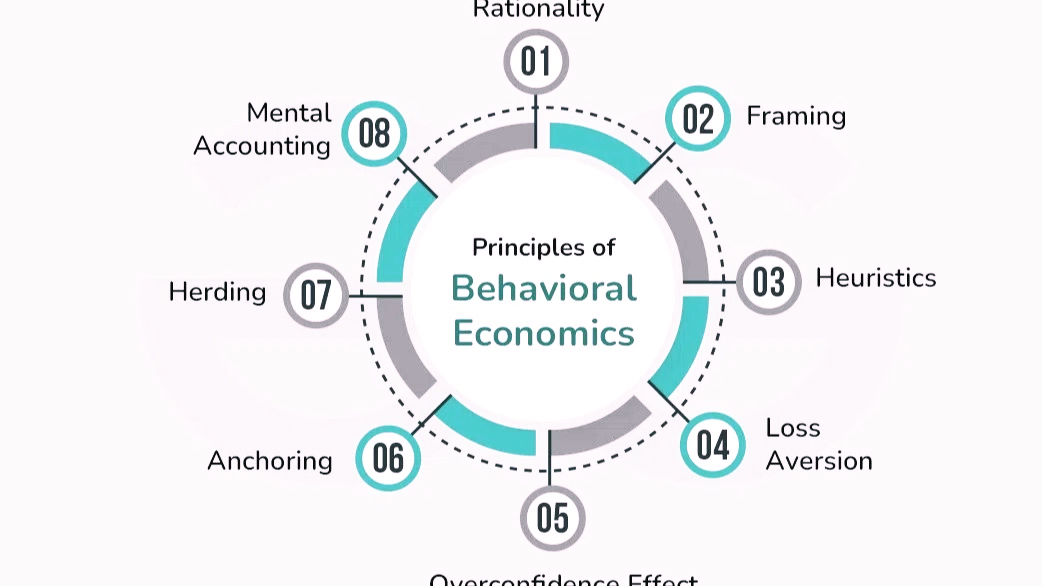
One of the most important concepts in Behavioral Finance is loss aversion.
Humans usually feel losses much more intensely than equivalent gains.
For example:
Losing $5,000 emotionally hurts far more than gaining $5,000 feels exciting.
This emotional imbalance affects financial behavior constantly.
Investors panic during downturns.
People avoid necessary risks after losses.
Individuals hold losing investments too long because emotionally accepting losses feels painful.
Behavioral Finance helps explain why fear of losing money often shapes decisions more strongly than opportunities for gain.
Social Media Intensified Financial Psychology
Modern financial behavior became even more emotional because of social media.
Every day, people compare:
- Wealth
- Investments
- Lifestyles
- Financial success
Someone always appears richer.
More successful.
Financially ahead.
This creates invisible emotional pressure.
Many people begin spending, borrowing, or investing emotionally simply because they fear feeling left behind.
Behavioral Finance explains that humans are naturally influenced by social environments and group behavior.
Especially during uncertainty.
Herd Mentality Creates Financial Bubbles
Humans naturally follow groups during uncertain situations.
If everyone appears excited about a market trend, many people assume the crowd must be correct.
This creates herd behavior.
And herd behavior can become extremely dangerous financially.
Stock bubbles.
Market manias.
Panic selling.
Behavioral Finance explains that people often copy collective emotional behavior instead of making independent rational decisions.
Especially when emotions become intense.
Overconfidence Quietly Creates Financial Risk
One of the most dangerous psychological biases in finance is overconfidence.
After experiencing success, many people begin believing they fully understand markets and risks.
This creates dangerous behavior.
Oversized investments.
Excessive borrowing.
Ignoring uncertainty.
Taking risks impulsively.
Behavioral Finance shows that confidence can become emotionally misleading during strong financial periods.
Especially during bull markets when optimism spreads everywhere.
Confirmation Bias Distorts Financial Judgment
Another important Behavioral Finance concept is confirmation bias.
Humans naturally search for information that supports what they already believe.
For example:
An investor who loves a company may ignore negative information while focusing only on positive news.
A spender may justify unnecessary purchases emotionally.
A borrower may underestimate risks because they emotionally want immediate approval.
This psychological tendency makes objective financial decision-making extremely difficult.
Because emotionally, people prefer information that reinforces comfort and certainty.
Humans Naturally Prefer Immediate Rewards
Behavioral Finance also explains why saving money feels difficult for many people.
Humans are naturally attracted to immediate gratification.
Buying something now creates immediate emotional pleasure.
Saving money creates delayed future rewards.
And psychologically, delayed rewards often feel less emotionally powerful.
Modern culture intensified this problem dramatically through:
- Instant shopping
- Fast delivery
- One-click purchases
- Constant advertising
As a result, long-term financial discipline became emotionally harder than ever before.
Emotional Investing Creates Inconsistent Results
Many investors emotionally react to market conditions.
Buying during excitement.
Selling during fear.
Changing strategies impulsively.
This creates inconsistency.
And inconsistent behavior usually produces inconsistent financial outcomes.
Behavioral Finance explains why emotional discipline matters so much in investing.
Because intelligence alone does not prevent emotional mistakes.
Even highly educated investors still struggle with fear, greed, impatience, and overconfidence.
Anchoring Influences Financial Decisions Constantly
Anchoring is another major Behavioral Finance concept.
People emotionally attach themselves to specific numbers or expectations.
For example:
An investor buys a stock at $200.
If the price falls to $140, they may refuse to sell because emotionally they remain anchored to the original purchase price.
Even if circumstances changed completely.
Anchoring influences:
- Investing
- Salary expectations
- Spending decisions
- Negotiations
People often make financial decisions based on emotionally familiar reference points instead of objective reality.
Financial Stress Changes Human Behavior
Behavioral Finance also studies how stress affects financial decision-making.
When people feel financially pressured, they often make short-term emotional decisions.
Borrowing impulsively.
Overspending emotionally.
Selling investments during panic.
Stress reduces patience.
Reduces rational thinking.
Increases emotional reactions.
This is why financial stability often creates psychological stability too.
Because calmer financial situations allow people to think more clearly and make better long-term decisions.
Financial Discipline Is More Psychological Than Mathematical
Many people believe financial success depends mainly on income.
But Behavioral Finance shows behavior matters enormously too.
A person earning a high income can still struggle financially because of emotional spending and poor decision-making.
Meanwhile, someone with moderate income but disciplined behavior may build long-term stability successfully.
Because financial success is not only about earning money.
It is also about managing emotions connected to money.
Behavioral Finance Changed Modern Investing
Behavioral Finance transformed the financial world because it challenged the idea that markets are fully rational.
Today, many investors, economists, and financial professionals recognize that psychology heavily influences markets.
Fear influences prices.
Greed influences bubbles.
Panic influences crashes.
Understanding behavior became just as important as understanding numbers.
Because markets are ultimately driven by people.
And people are emotional.
Emotional Awareness Quietly Creates Financial Advantages
One of the biggest lessons from Behavioral Finance is that self-awareness creates financial advantages.
People who understand their emotional tendencies often:
- Invest more consistently
- Avoid impulsive spending
- Handle volatility calmly
- Think longer-term
- Make more rational decisions during uncertainty
And over decades, avoiding destructive emotional decisions repeatedly becomes incredibly valuable financially.
Understanding Behavior Changes the Way People Think About Money
Behavioral Finance teaches something extremely important:
Financial decisions are rarely purely logical.
Humans are emotional.
Psychological.
Influenced by fear, stress, greed, habits, and social pressure.
And once people understand this, they often stop viewing financial mistakes as purely mathematical failures.
Instead, they begin recognizing the emotional and psychological forces behind financial behavior.
Because successful financial management is not only about intelligence or income.
It is also about emotional discipline, self-awareness, and understanding human behavior.
And in a world filled with nonstop financial noise, comparison, fear, advertising, and emotional pressure…
Those psychological skills quietly became some of the most valuable financial advantages anyone can develop.